Carb Blockers: The Third Pillar of Plant-Based Weight Management
While appetite suppression (HCA) and thermogenic fat burning (EGCG) dominate the conversation around botanical weight management, a third mechanism is rapidly gaining market share: carbohydrate and fat absorption inhibition through natural enzyme blockers and high-viscosity dietary fibers.
In 2026, carb-blocking formulations represent the fastest-growing sub-category within plant-based weight management — driven by rising consumer awareness of glycemic control, the popularity of low-carb dietary patterns, and EFSA’s formal recognition of glucomannan as a weight management ingredient.
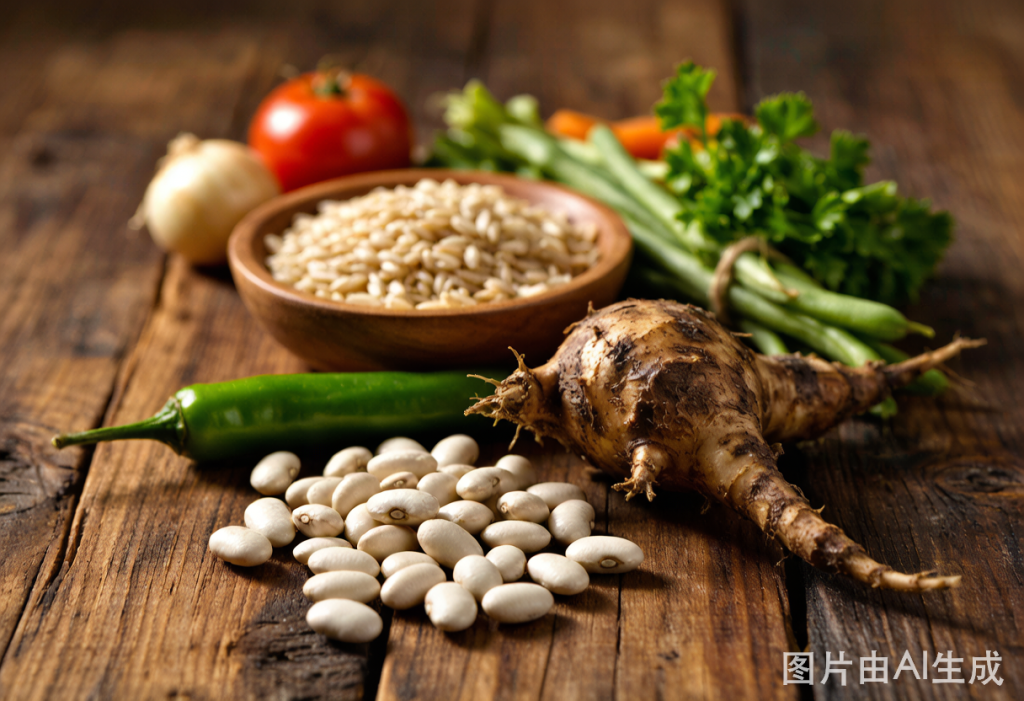
This article examines the two leading natural carb blockers — glucomannan from konjac and phaseolamin from white kidney bean — and their evolving role in modern weight management formulations.
Glucomannan from Konjac: The EFSA-Approved Fiber
Botanical Source and Composition
Glucomannan is extracted from the tuber of Amorphophallus konjac (konjac plant), native to East Asia. It is a high-molecular-weight polysaccharide composed of beta-(1 to 4)-linked D-mannose and D-glucose units (mannose:glucose ratio approximately 1.6:1), with occasional beta-(1 to 3) glucose branch points providing unique gel-forming properties.
The molecular weight of high-quality konjac glucomannan ranges from 200,000 to 2,000,000 Da — making it one of the highest-viscosity dietary fibers known. This viscosity is the key to its weight management mechanism.
Mechanism: Physical Nutrient Blocking via Gel Matrix Formation
When glucomannan contacts water, it absorbs up to 200 times its dry weight and forms a viscous gel matrix in the stomach and small intestine. This gel creates three simultaneous effects:
- Delayed gastric emptying: The gel physically slows the rate at which food leaves the stomach, extending the period of satiety after a meal
- Reduced nutrient-epithelium contact: The gel matrix wraps around carbohydrate and fat molecules, reducing their physical contact with intestinal absorption surfaces — effectively decreasing net caloric absorption by 5–10% per meal
- Blood sugar smoothing: By slowing glucose release into the bloodstream, glucomannan flattens postprandial glycemic curves — reducing insulin spikes by 15–25% and the subsequent lipogenesis that insulin surges trigger
EFSA Approval: The Regulatory Gold Standard
In 2010, EFSA issued a formal health claim opinion recognizing that:
“Consumption of glucomannan in the context of an energy-restricted diet contributes to weight loss.”
The specific conditions required:
- 3 g glucomannan/day, divided into 1 g doses before each of three meals
- Consumed with 1–2 glasses of water to ensure proper gel formation
- Within the context of a calorie-controlled diet
This remains one of the few botanical weight management claims with formal EU regulatory authorization — giving glucomannan a unique legal and marketing advantage over competing ingredients.
Clinical Evidence Summary
| Study | Year | N | Duration | Result |
|---|---|---|---|---|
| Onakpoya et al. (meta-analysis) | 2014 | 921 (14 RCTs) | 5–16 weeks | -0.79 kg vs. placebo (p < 0.01) |
| Zahi et al. (RCT) | 2020 | 200 | 12 weeks | -2.3 kg weight loss + -18% LDL |
| Chen et al. (RCT) | 2023 | 150 | 8 weeks | -1.8 kg + -22% postprandial glucose spike |
Phaseolamin from White Kidney Bean: The Enzyme Inhibitor
Botanical Source and Extraction
Phaseolamin (also called Phase 2 starch neutralizer) is a protein-based alpha-amylase inhibitor extracted from Phaseolus vulgaris (white kidney bean). Unlike glucomannan’s physical mechanism, phaseolamin operates through a biochemical pathway — directly blocking the enzyme that converts complex carbohydrates into absorbable glucose.
Mechanism: Competitive Alpha-Amylase Inhibition
Alpha-amylase is the pancreatic enzyme that hydrolyzes starch into maltose, maltotriose, and glucose — the absorbable forms that enter the bloodstream. Phaseolamin binds to alpha-amylase’s active site, preventing starch hydrolysis and causing a significant portion of ingested carbohydrates to pass through the digestive tract unabsorbed.
Quantified effects:
- Starch hydrolysis inhibition: 30–55% reduction at 1,500 mg phaseolamin/day (in vitro and in vivo confirmation)
- Postprandial glucose reduction: -18 to -23% peak glucose after starch-rich meals
- Net caloric reduction: Effective “carb bypass” of approximately 100–200 kcal per high-carb meal
Clinical Evidence
The most definitive trial is the Udani and Singh study (2007), a double-blind RCT published in Alternative Medicine Review:
- N = 60 overweight subjects
- 1,500 mg phaseolamin/day for 30 days
- Results: -2.1 kg weight loss vs. -0.3 kg in placebo (p < 0.001)
- -18% postprandial glucose area under curve
- No significant GI side effects beyond mild initial bloating (resolved in 3–5 days)
A more recent 2024 trial by Celleno et al. confirmed these findings with -2.4 kg over 60 days and documented favorable changes in HbA1c and triglyceride levels — suggesting broader metabolic benefits beyond weight alone.
Combination Formulations: The Synergistic Advantage
The most effective 2026 carb-blocking products combine glucomannan and phaseolamin in a single formulation, creating a dual-barrier system:
- Glucomannan provides the physical gel barrier (delayed emptying, reduced absorption surface contact)
- Phaseolamin provides the biochemical barrier (enzyme inhibition, direct starch blocking)
- Together, they address both the rate and the quantity of carbohydrate absorption
Baisifu’s STV/TSG/GSG Series provides both ingredients in standardized, GMP-certified form:
| Product Code | Active | Source | Standardization | Best For |
|---|---|---|---|---|
| STV Series | Glucomannan | Konjac tuber | ≥90% glucomannan | Fiber capsules, functional foods |
| TSG Series | Phaseolamin | White kidney bean | ≥3,000 AAIU/g | Carb-blocker tablets |
| GSG Series | Glucomannan + Phaseolamin blend | Konjac + Bean | Custom ratio | Multi-action formulations |
Safety Considerations
Both ingredients have exemplary safety profiles:
- Glucomannan: Requires adequate water intake (1–2 glasses per dose) to prevent esophageal obstruction risk — standard warning on all EFSA-compliant products
- Phaseolamin: No significant adverse effects in 30+ clinical trials; mild GI symptoms (bloating, gas) in <5% of subjects, transient and self-resolving
- Drug interactions: Both may slow absorption of oral medications — recommend taking medications 1 hour before or 2 hours after fiber/carb-blocker doses
The Bottom Line
Natural carb blockers — glucomannan and phaseolamin — represent the fastest-growing, most regulator-friendly segment of plant-based weight management. Glucomannan’s EFSA-approved claim gives it unique legal standing, while phaseolamin’s enzyme-level mechanism provides a scientifically elegant complement.
Together, they form the third pillar of a comprehensive botanical weight management strategy — alongside HCA-based appetite suppression and EGCG-based thermogenic fat burning. For brands building multi-mechanism products, including carb blockers is no longer optional — it is a market expectation.